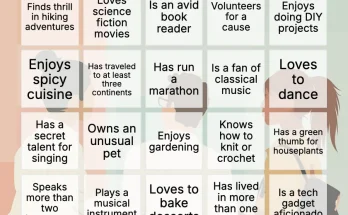
Picture this: a conference room full of people who’d rather be anywhere else. You’ve got the mandatory team-building session on the calendar, and the energy is… well, it’s flat. Now imagine the same room twenty minutes later — people laughing, high-fiving, actually talking to colleagues from other departments. That’s the quiet magic of a well-designed custom bingo card. It sounds almost too simple, right? Honestly, that’s kind of the point.
Bingo has been around for centuries — seriously, versions of it date back to 16th-century Italy — and there’s a reason it keeps showing up at parties, fundraisers, and now, corporate events. It’s low-pressure, instantly understandable, and it gives people a reason to interact without the awkwardness of forced icebreakers. Let’s dive into how you can build custom bingo cards that actually work for your team.
Why Bingo Works When Other Icebreakers Flop
Most team-building activities fail for one simple reason: they feel like homework. Trust falls, personality quizzes, that one facilitator with the whistle… people check out fast. Bingo sidesteps all of that. It’s familiar, it’s playful, and it taps into a bit of healthy competition without anyone feeling exposed.
There’s also a practical angle. Bingo scales beautifully. Whether you’ve got 12 people in a startup office or 300 at a regional sales conference, the format holds up. And when you customize the squares, the game stops being generic and starts reflecting your actual company culture.
Start With the Goal, Not the Grid
Here’s the deal — before you open Canva or Google Slides, ask yourself what you want this event to accomplish. The bingo card is just a vehicle. The destination matters more.
Common goals for corporate bingo include:
- Getting to know each other — squares about hobbies, hometowns, hidden talents
- Learning company info — trivia about departments, history, or product lines
- Encouraging cross-team mixing — squares that require finding someone from another department
- Reinforcing training content — key terms or concepts from a workshop
- Pure fun and morale — silly prompts, inside jokes, office pet photos
- Mix easy wins with a couple of challenging squares
- Avoid anything that could embarrass someone (no “who’s the worst dancer”)
- Include at least one square that requires talking to a senior leader
- Keep language inclusive and jargon-free
- Test the card with a small group before the big day
- Set a clear time limit (20–40 minutes usually works)
- Explain the rules in under two minutes
- Offer small prizes — gift cards, snacks, extra PTO hour… whatever fits your culture
- Have a designated “bingo caller” or MC to keep energy up
- Snap photos — these become great internal comms content later
- Squares that are too abstract or impossible to verify
- Cards that are identical — randomization is part of the fun
- Ignoring remote or hybrid attendees
- Making the game too long (attention spans are real)
- Forgetting to actually explain how someone wins
Once you know the goal, the square content basically writes itself. Well, almost.
Choosing the Right Format
Not all bingo cards are created equal. You’ve got options, and the right one depends on your crowd and your venue.
Traditional 5×5 Grid
The classic. 24 squares plus a free space in the center. Great for larger groups and longer sessions. It gives people plenty of chances to win, which keeps momentum up.
3×3 or 4×4 Grids
Faster and less overwhelming. Ideal for short sessions, virtual events, or teams that skew introverted. Fewer squares means quicker wins, which means quicker dopamine hits.
Blackout vs. Line Bingo
Line bingo (five in a row) is the standard and keeps things moving. Blackout — filling the entire card — takes longer but encourages deeper conversations. For a 30-minute mixer, stick with lines. For a half-day retreat, blackout can work nicely.
Writing Squares That People Actually Want to Fill
This is where most custom bingo cards either shine or crash. The prompts matter. A lot.
Good squares are specific, a little surprising, and easy to verify. Vague prompts like “talk to someone new” are forgettable. Instead, try something like “Find someone who has traveled to three continents” or “Meet a colleague who plays an instrument.”
A few quick tips:
And sure, a little humor goes a long way. Just make sure the joke lands for everyone, not just the marketing team.
Design Tools and Templates Worth Using
You don’t need a design degree. Honestly, you don’t even need Photoshop. Here are some solid options:
| Tool | Best For | Cost |
|---|---|---|
| Canva | Drag-and-drop templates, quick turnaround | Free / Pro |
| Myfreebingocards.com | Auto-generating unique cards | Free |
| Google Slides | DIY control, easy sharing | Free |
| Adobe Express | Polished branding | Free / Paid |
| Bingo Baker | Printing and digital play | Free / Low cost |
If you’re running a virtual event, tools like Bingo Baker let you share a link so everyone gets a randomized card. For in-person, printing on cardstock makes a small but noticeable difference — flimsy paper feels cheap, and people notice.
Adding Branding Without Going Overboard
Custom bingo cards are a sneaky-good branding opportunity. Slap your logo in the corner, use brand colors for the grid, maybe work in a tagline. But — and this is important — don’t let branding swallow the fun. If the card looks like a compliance document, engagement drops.
A good rule of thumb: 80% play, 20% brand. The card should feel like a game first, a company artifact second.
Running the Game: Logistics That Matter
The card is only half the battle. How you run the event determines whether it soars or sputters.
One more thing: consider a “no repeats” rule where each person can only sign a square once per participant. It forces broader mingling instead of everyone clustering around the same three extroverts.
Common Mistakes to Avoid
Even seasoned organizers trip up here. Watch out for:
And please, don’t skip the debrief. A quick five-minute wrap-up where people share their favorite square or a surprising discovery turns a game into a genuine team moment.
The Takeaway
Custom bingo cards aren’t a gimmick. They’re a flexible, low-cost, surprisingly effective way to get people talking, laughing, and actually remembering each other’s names a week later. The best team-building moments rarely come from a slide deck or a facilitator with a clipboard. They come from small, human interactions — the kind a well-crafted bingo square quietly nudges into existence.
So the next time you’re staring down a calendar invite labeled “Mandatory Fun,” maybe don’t roll your eyes. Grab a template, write a few clever squares, and see what happens. The results might surprise you.