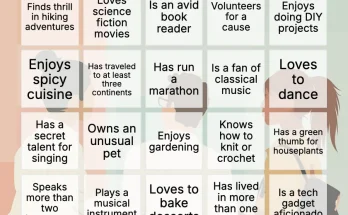
Let’s be honest—when you hear the word “bingo,” your brain probably jumps to a stuffy church hall, a dauber in hand, and someone yelling “B-9!” at an alarming volume. But here’s the thing: bingo is having a quiet, unexpected renaissance. Not as a gambling habit, but as a tool for mindfulness and relaxation breaks. Sounds odd, right? Stick with me.
The modern world is a noisy place. Your phone buzzes, your inbox overflows, and your brain feels like a browser with 47 tabs open. You know that feeling—when even a “quick break” turns into scrolling social media, which somehow makes you more tired. That’s where bingo sneaks in. It’s not about winning a jackpot. It’s about the rhythm of the game, the focus it demands, and the weirdly soothing repetition of marking numbers.
Why Bingo Works for Your Brain (Really)
Mindfulness is often sold as this lofty, incense-burning practice. But honestly, mindfulness just means paying attention to the present moment without judgment. And bingo? Well, it forces that. You can’t play bingo while half-thinking about your grocery list. You have to listen. You have to scan. You have to act.
That focused attention acts like a mini-meditation. It’s a gentle anchor. Your mind wanders—sure, it will—but the game pulls you back. That back-and-forth? That’s the exact muscle you train in formal meditation. So, in a way, bingo is a sneaky meditation teacher that doesn’t ask you to sit cross-legged or hum.
There’s also the sensory side. The tactile feel of a paper card. The satisfying thunk of a stamp or the smooth glide of a digital dauber. The visual scan of numbers in a grid. These small, repetitive actions are grounding. They pull you out of your head and into your hands. It’s almost like a fidget toy, but with a structure and a goal.
The Unexpected Calm of “Almost Winning”
Here’s a weird quirk about bingo—it’s built on near-misses. You’re one number away, then two, then one again. Most people find that frustrating in other games. But in bingo? It’s part of the charm. The tension builds and releases, builds and releases. That rhythm is actually soothing.
Think of it like ocean waves. The anticipation of the next number is the swell. The call is the crash. The marking is the retreat. You get into a flow state. And flow—that lovely zone where time disappears—is a known stress-buster. Bingo gives you a low-stakes path to flow. You’re not solving a complex puzzle. You’re just riding the wave.
Plus, there’s zero pressure to be good at it. You can’t really fail at bingo. You just… play. That lack of performance anxiety is rare in adult life. It’s a safe space for your brain to relax.
How to Turn Bingo into a Deliberate Relaxation Break
Don’t just grab a card and go. Set the scene. Here’s a little ritual I’ve started using during my afternoon slump—that 2:30 PM wall where coffee just doesn’t cut it anymore.
- Pick a quiet space. Not your desk. Move to a couch or a chair by a window. Even 5 minutes away from your screen changes the vibe.
- Use a physical card if possible. The digital ones are convenient, but the physical act of marking with a pen or chips is more tactile. It engages your senses more deeply.
- Set a timer for 10 minutes. This isn’t a marathon. It’s a break. A short, intentional pause.
- Breathe between calls. When you hear a number, take a slow inhale as you scan, and a slow exhale as you mark. That’s it. That’s the whole trick.
- Don’t play for a prize. Play for the process. If you win, great. If not, you still got 10 minutes of focused calm.
Honestly, the “no prize” part is key. When you remove the reward, you remove the anxiety. You’re left with pure, unadulterated process. And that process is weirdly meditative.
Bingo Variations for Deeper Mindfulness
Regular bingo is great. But if you want to amp up the mindfulness factor, try these twists. They force you to be even more present.
1. Sensory Bingo
Instead of numbers, make a card with sensory experiences. Like “a warm cup of tea in my hands” or “the sound of rain outside.” Then, during your break, you check off what you notice. It’s a gratitude practice disguised as a game. You start looking for good things, and suddenly, you’re hyper-aware of the present moment.
2. Breath-Count Bingo
This one is a bit wild, but bear with me. Create a card with numbers 1 through 5 in random order. Each square represents a breath cycle. Inhale for 4, exhale for 6. When you complete a cycle, you mark a square. The goal? Fill a row. It’s slow, it’s deliberate, and it forces you to sync your movement with your breath. It’s like yoga, but with a bingo card.
3. Digital-Free Bingo
Use an old-school bingo cage or even a random number generator app (but put your phone on airplane mode). The point is to disconnect. No notifications. No “just checking” messages. Just you and the numbers. It’s a digital detox in microdoses.
What the Research Says (Sort Of)
Look, I’m not going to cite a bunch of clinical studies because, well, the research on bingo specifically for mindfulness is thin. But the research on focused attention and flow states is solid. And bingo ticks those boxes. It’s a form of active meditation. You’re not emptying your mind; you’re filling it with a simple, repetitive task. That’s actually easier for most people than “thinking about nothing.”
In fact, some occupational therapists use bingo for patients with dementia or anxiety. The structured, predictable nature of the game provides comfort. It’s a familiar rhythm in an unpredictable world. That’s something we could all use, honestly.
Making It a Habit (Without It Becoming a Chore)
Here’s the deal—if you force yourself to do bingo every day, it’ll feel like homework. And homework isn’t relaxing. So, don’t schedule it. Instead, keep a bingo card in a drawer or on your coffee table. When you feel that familiar buzz of overwhelm, or when you catch yourself doom-scrolling for the fifth time, grab the card. Use it as a “reset button.”
You could even pair it with a habit you already have. Like, after you finish your lunch, play one quick game. Or before you start your evening wind-down, do a 10-minute bingo session. Anchoring it to an existing routine makes it stick without needing willpower.
One thing I’ve noticed—when I play bingo as a break, I don’t get that “jittery” feeling I get after scrolling. My eyes feel less strained. My shoulders drop. It’s like the game gives my brain a place to rest, rather than a new thing to worry about.
Bingo vs. Other Mindfulness Apps
You might be thinking, “Why not just use Headspace or Calm?” Fair question. Those apps are great. But they require you to sit still and listen. Sometimes, that’s too passive. Your mind rebels. Bingo is active. You’re doing something with your hands. You’re scanning, matching, marking. It’s a different kind of engagement.
Also, let’s be real—mindfulness apps can feel a bit preachy. Bingo doesn’t judge you. It doesn’t tell you to “let go of your thoughts.” It just… exists. It’s a game. And games are inherently playful. Playfulness is a fantastic antidote to stress. It’s hard to be anxious when you’re playing a silly game with numbers.
| Feature | Bingo Break | Meditation App |
|---|---|---|
| Active vs. Passive | Active (hands-on) | Passive (listening) |
| Learning Curve | None | Some (breathing techniques) |
| Cost | Free (print a card) | Subscription often required |
| Pressure to “Do it right” | Low | Medium (you might feel you’re failing) |
| Fun Factor | High | Low to Medium |
See the difference? Bingo is approachable. It meets you where you are. You don’t need to clear your mind. You just need to listen for the next number.
The Bottom Line on Bingo for Relaxation
So, here’s the takeaway. Bingo isn’t just for grandmas and casino night. It’s a legitimate, low-key tool for mental breaks. It’s a way to step out of the chaos and into a simple, structured moment. The kind of moment that feels rare these days.
The next time you feel your brain overheating, try it. Print a card. Grab a pen. Set a timer. And just play. Don’t worry about winning. Don’t worry about being productive. Just let the numbers wash over you. You might be surprised at how quiet your mind gets.
In a world that constantly demands your attention, giving it to a simple game of chance is a radical act of self-care. It’s a reminder that not everything needs to be optimized, improved, or monetized. Sometimes, a break is just a break. And bingo is a pretty lovely way to take one.
So go ahead. Mark that card. Breathe. Repeat. You’ve earned it.
[Meta title: Bingo for Mindfulness and Relaxation Breaks | Meta Description: Discover how bingo can be a simple, effective tool for mindfulness and relaxation breaks. Learn techniques, variations, and why this classic game calms your mind